
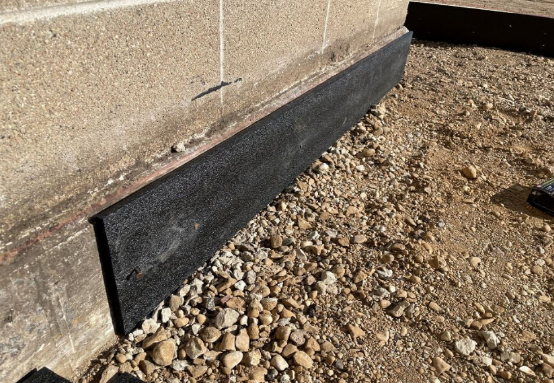
Here is something that does not get said enough in construction circles: the joint filler is often the reason a structure fails, not the concrete around it. Builders obsess over mix ratios, curing times, and reinforcement placement, then fill expansion joints with whatever is cheapest and move on. That decision quietly undoes a lot of careful work. Expansion joint foam gets chosen when people finally understand what the joint is actually being asked to do — and why most other fillers cannot keep up with it over the long run.
Joints Are Not a Weakness — Bad Fillers Are
The standard explanation of expansion joints — that they allow movement — leaves out the part that matters most in practice. Two adjacent concrete slabs do not just move apart and come back together in a clean straight line. They twist slightly. One end settles faster than the other. Thermal movement is uneven across the width of a wide pour. The filler inside that joint has to handle all of this without transferring load sideways into the adjoining section, without cracking at the edges, and without letting water sit against the substrate.
Bitumen board and cork do not manage that combination well. They compress unevenly, harden with age, and once they crack at the surface, the joint edge starts taking load it was never designed to carry. The deterioration from there is gradual but relentless — edge spalling, water ingress, freeze-thaw damage working down through the joint channel. By the time it is visible from above, the damage runs deep.
The Open-Cell Mistake That Keeps Getting Made
A surprisingly common error on outdoor projects is using open-cell foam where closed-cell is needed. Open-cell foam feels similar to handle, costs less, and compresses just as easily — so it gets used in pavement joints, external wall bases, and drainage channel surrounds without much thought. The problem is that open-cell foam absorbs water freely and holds it. In a joint that sees rain and ground moisture regularly, that means a permanently saturated filler pressing dampness against the concrete face through every cold season. The foam itself does not fail dramatically — it just sits there, wet, slowly contributing to the substrate deterioration it was supposed to prevent.
Closed-cell expansion joint foam has a sealed structure at the cellular level. Water cannot penetrate it. It can sit submerged and come out dimensionally unchanged. For any external joint — and especially anything at or below ground level — the cellular structure of the foam is not a secondary consideration. It is the primary one.
What Installers Get Wrong About Sealant
The relationship between foam backer and surface sealant is where a lot of joint systems quietly fail, usually because the two are not thought of as a system at all. Sealant applied without a foam backer goes in too deep. A sealant that is deeper than it is wide cannot flex properly through its full working range — it develops three-point adhesion, bonding to both sides and the bottom of the channel, which prevents the movement it needs to accommodate. It tears from the bottom rather than stretching cleanly.
Joint foam as a backer establishes the correct depth-to-width relationship before the sealant goes in. It also gives the sealant a non-adhering surface at the base so it can stretch in two directions rather than being pulled apart in three. This is a basic principle in joint sealing that gets skipped often enough to cause widespread premature sealant failure on otherwise sound structures.
Conclusion
Expansion joint foam earns its place not because it is simple but because it handles a genuinely complicated set of demands — compression, recovery, moisture exclusion, thermal cycling — without requiring maintenance once it is properly installed. The details that separate a good installation from a poor one come down to matching foam type to exposure conditions, understanding that open-cell and closed-cell are not interchangeable, and treating the foam-sealant combination as a designed system rather than two separate materials applied in sequence. Structures that get those details right tend to stay that way for a long time. The ones that cut corners on joint filling rarely go as long before remedial work is needed.